How to Choose an Interior Designer for a Major Renovation
Most homeowners start this search the wrong way: on Instagram. They find a feed they love, reach out, and assume the rest will follow. Sometimes it does. More often, they end up six months in wondering why the project doesn’t feel like the pictures.
Choosing a designer for a major renovation isn’t primarily a visual decision. It’s a values decision. And making it well before the contracts are signed and the contractors are on-site is the single most consequential step in any large-scale project.
After 25 years of working with homeowners on projects that reshape how they live, here is what we would tell anyone beginning this search.
Start with process, not portfolio
Every designer has a portfolio. The portfolio tells you what they’ve done. It tells you almost nothing about what it was like to work with them, whether the project came in on time, or whether the homeowners would do it again.
Before you fall in love with a room on a website, ask how they work. How do decisions get made? Who manages the relationship with contractors? What happens when something goes wrong, and something always does?
The answers to these questions will tell you more than a thousand square feet of beautiful photography.
Ask who’s actually in the room
On larger projects, many firms assign a principal designer to initial meetings and hand off day-to-day management to junior staff. There’s nothing inherently wrong with this model, but you should understand it before you sign.
Ask directly: Who will I be working with throughout the project? Who attends site visits? Who makes the call when there’s an issue on a Tuesday afternoon and the contractor is waiting for an answer?
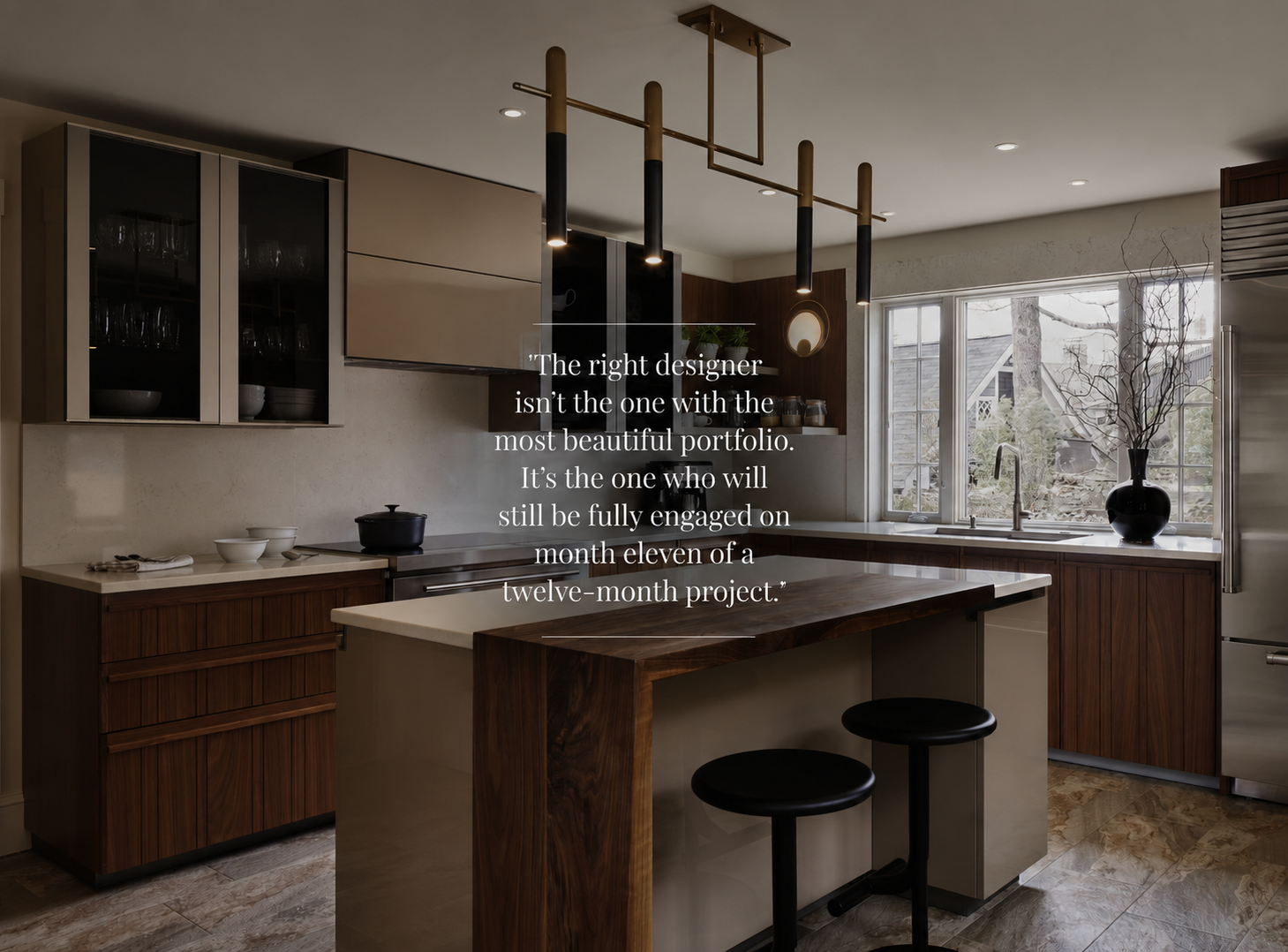
“The right designer isn’t the one with the most beautiful portfolio. It’s the one who will still be fully engaged on month eleven of a twelve-month project.”
Credentials are a signal, not a guarantee
The interior design industry has no universal licensing requirement, which means anyone can call themselves a designer. Professional certifications exist precisely to separate those who’ve been tested and verified by their peers from those who haven’t.
The CMKBD (Certified Master Kitchen & Bath Designer) is the highest credential in the kitchen and bath field, as designated by the National Kitchen and Bath Association (NKBA). It requires years of documented project experience, a rigorous peer examination, and ongoing continuing education to maintain.
A credential like this isn’t a guarantee of taste. It is a guarantee of technical mastery, which matters enormously when a project involves structural changes, plumbing relocations, or anything that touches how a home actually functions.
Worth Knowing
Award recognition from industry peers (NKBA, PRISM, Best of Houzz) is another useful signal. These aren’t marketing designations. They’re peer evaluations, which carry a different weight than self-promotion.
Pay attention to how they listen
The best design meeting you’ll ever have is one where the designer asks more questions than they answer. About how you actually live. About what’s bothered you about the current space. About who uses the kitchen and when, and what that looks like on a normal Tuesday morning versus a Sunday afternoon.
Design that genuinely serves a household well begins with understanding the household, not presenting solutions before the problems are fully understood.
If a designer arrives at a first meeting with a portfolio and a prepared pitch, that’s useful information about how they work.
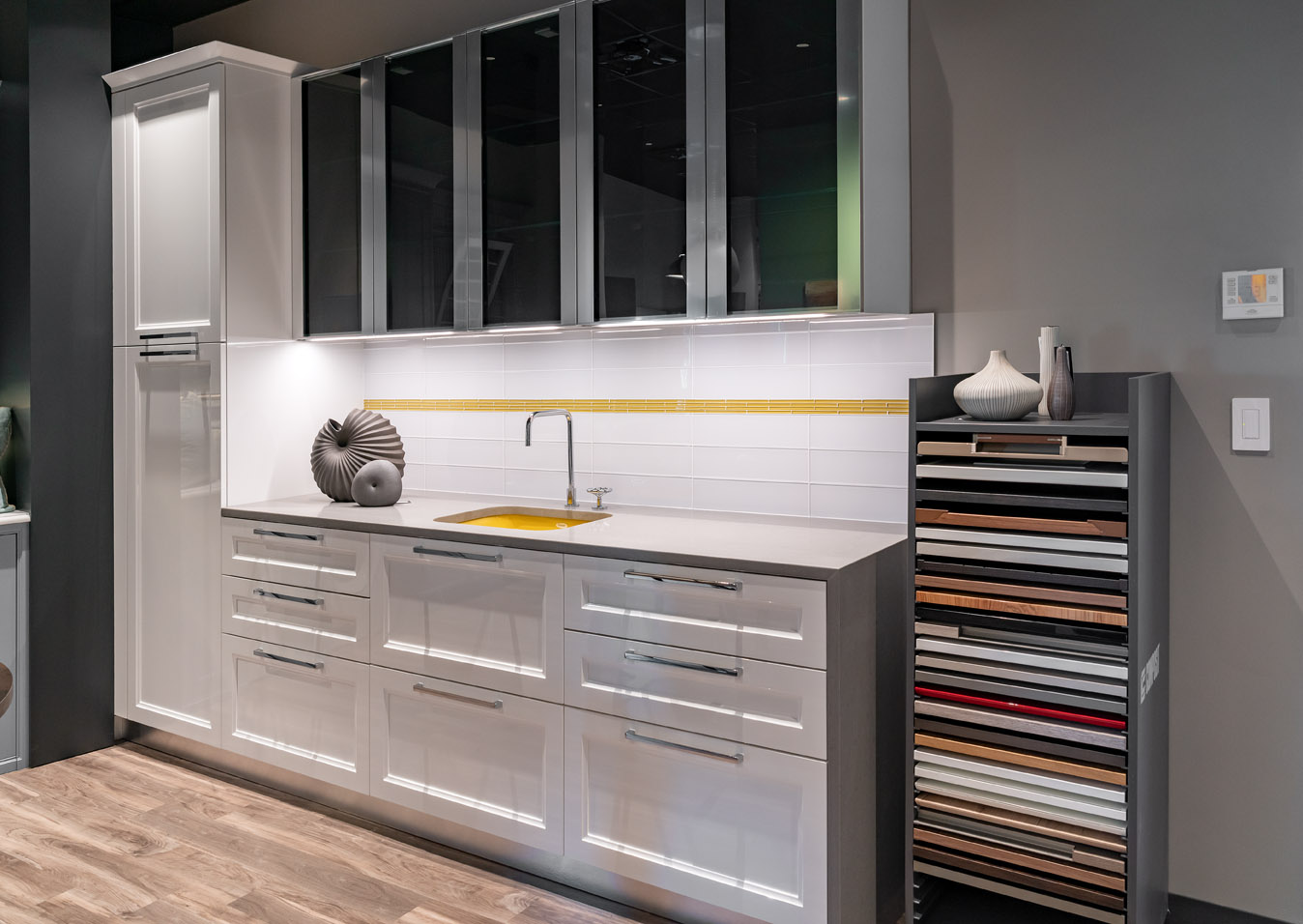
See it. Touch it. Live in it before any of it becomes permanent.
Where they work matters more than you think
Most designers work from a laptop and a set of material samples carried from appointment to appointment. Decisions happen in your living room, under whatever light comes through the window that afternoon, which is rarely the light those materials will actually live in.
The Experience Studio at Interiology Design Co. was built as a deliberate alternative to this. It’s a physical space where fully realized design vignettes allow you to see, touch, and experience the materials, fixtures, and configurations you’re considering before any of them become permanent.
Cabinetry at scale. Stone under real light. Fixtures in actual context. It removes guesswork from a process that is otherwise full of it.
Look for someone who’s seen things go sideways
A major renovation (kitchen, primary suite, whole-home) typically takes several months from design through completion. Over the course of that timeline, something unexpected will happen. A lead time shifts. A product is discontinued. A structural discovery changes the plan.
The question isn’t whether a problem will arise. It’s how your designer responds when it does.
Ask your shortlisted designers about a project that didn’t go smoothly. How they answer that question will tell you everything.
The relationship is part of the work
You will spend a significant portion of the next year in direct conversation with your designer. You’ll be making decisions together, sometimes quickly, sometimes under pressure, about your home, your money, and how you want to live. The relationship matters as much as the résumé.
Choose someone whose values align with yours. Whose communication style you can work with over a long stretch. Whose honesty you trust when you need to hear something you might not want to hear.
If you’re beginning to think about a major project (kitchen, bathroom, primary suite, or a more comprehensive transformation), we’d welcome the conversation. Not a pitch. A real conversation about what you’re imagining and whether we’d be the right fit to help you get there.

Begin The Conversation
The right fit starts
with a single meeting.
Tell us about the project. We'll tell you what's possible and whether we're the right team to get you there.
Schedule A Consultation