What a Luxury Kitchen Renovation Actually Involves: And Why It’s Worth Every Decision
The kitchen is the room that gets renovated most often and regretted most rarely — when it’s done right. When it’s done wrong, it’s the room that quietly announces its compromises every single morning. The difference between those two outcomes is almost never about budget. It’s about process.
A luxury kitchen renovation at the level Interiology works — projects typically ranging from $150,000 to $300,000 and above — is not a product purchase. It’s a design engagement. The cabinetry, stone, appliances, and fixtures are the result of a long conversation about how a household actually lives, what the space needs to do, and what it should feel like on an ordinary Tuesday when nothing special is happening.
Here is what that process actually looks like — and what separates a kitchen that looks expensive from one that earns it.
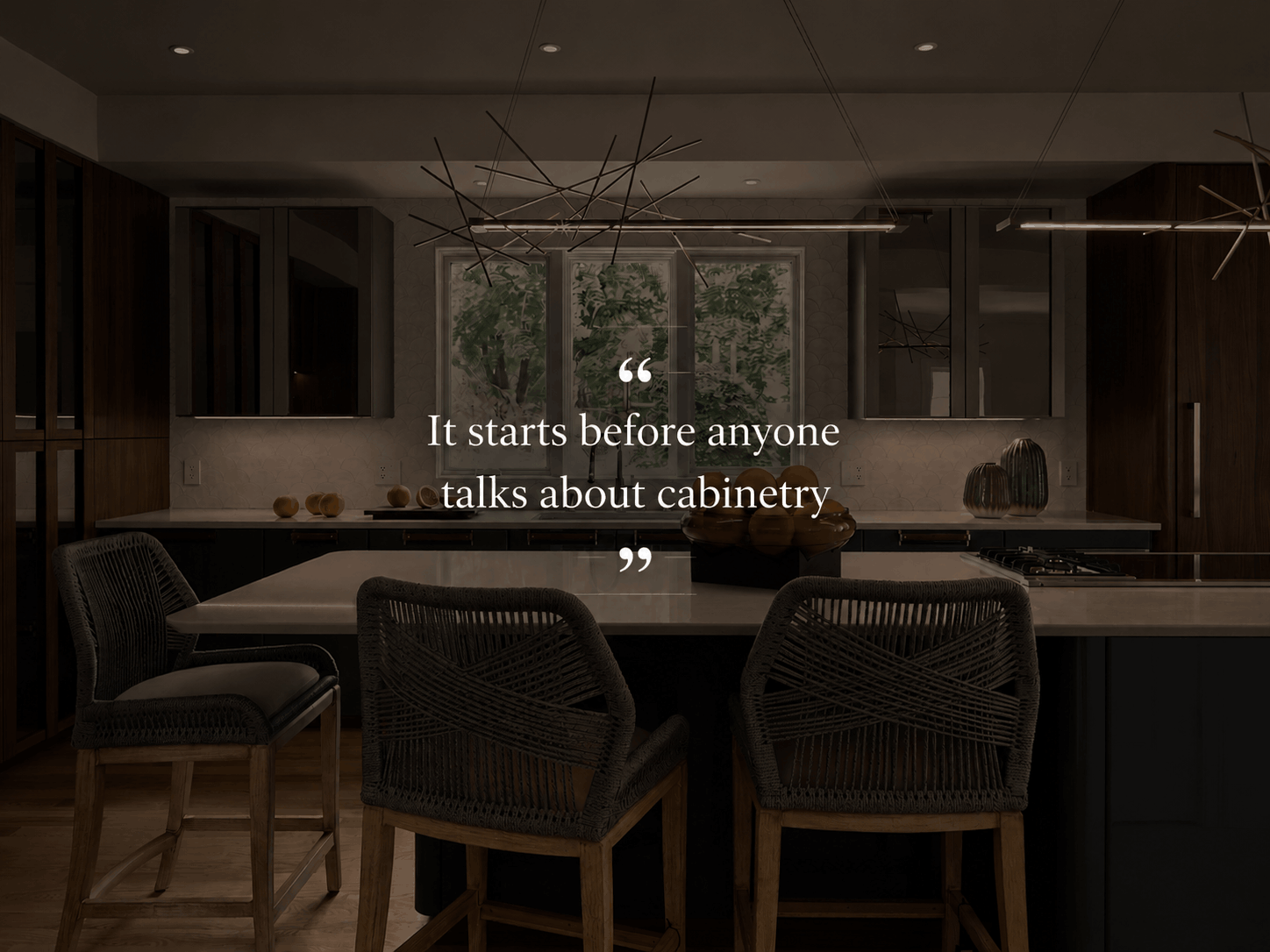
It starts before anyone talks about cabinetry
The first mistake most homeowners make when beginning a kitchen renovation is starting with product. They visit a showroom, they fall in love with a cabinet finish, they build the project backward from there. Sometimes this works. More often, it produces a kitchen that’s beautiful in isolation and slightly wrong in practice.
At Interiology, the kitchen conversation starts with the household. Who cooks, and how seriously. Whether the kitchen is the center of social life or a more private, functional space. What the current kitchen gets wrong — not just aesthetically, but physically. Where people stand when they talk. Where things pile up. What’s always bothered them that they’ve stopped noticing.
That conversation — usually spread across two or three meetings before a single product is specified — is where the real design happens. Everything that follows is execution.
“The best kitchen I ever designed was for a family that had been making do with a bad layout for fifteen years. They’d stopped seeing it. Our first job was to help them see it again — and then imagine something completely different.”
Layout first, always
Before finishes, before appliances, before any conversation about stone or hardware — layout. The configuration of a kitchen determines how it will feel to use every single day, and it’s the decision that’s most expensive to get wrong.
The classic work triangle — refrigerator, range, sink — is a starting point, not a conclusion. Modern kitchen design has evolved considerably beyond it. Multiple work zones for households where two people cook simultaneously. Dedicated prep areas separate from the main cooking surface. Islands sized for actual use rather than visual impact. Pantry configurations that reflect how a family actually shops and stores.
Getting layout right requires understanding movement — how people flow through the kitchen, where they enter from, where they’re going when they leave. It’s architecture as much as design, and it’s where a Certified Master Kitchen & Bath Designer earns the credential.
The island question
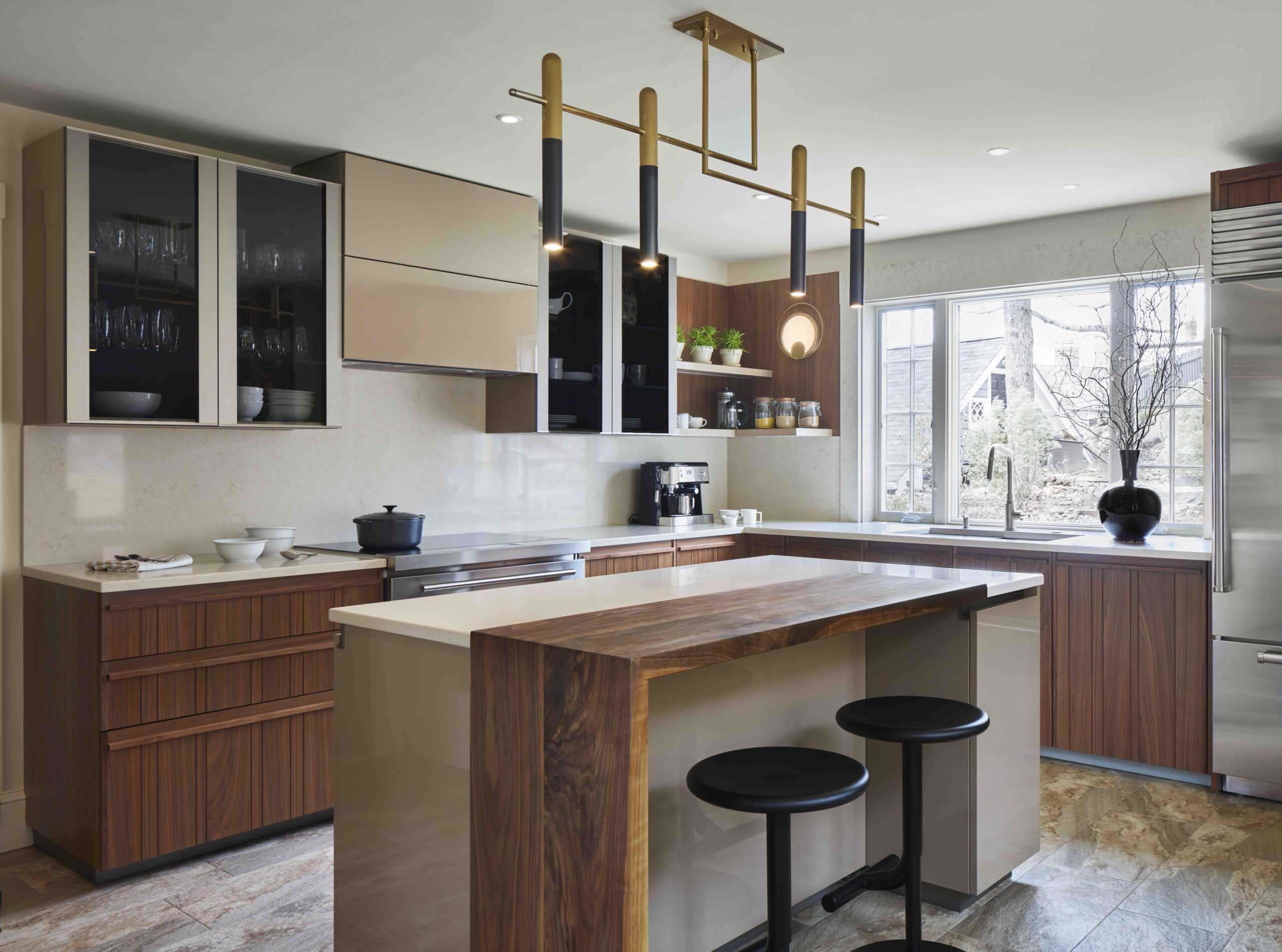
Almost every client wants an island. The right question is what the island needs to do. Seating? Prep? A second sink? Additional storage? All of the above? The answer shapes the size, the configuration, the countertop overhang, and the relationship between the island and the surrounding cabinetry.
An island that’s too large makes the kitchen feel crowded and the workflow awkward. An island that’s too small looks like an afterthought. Getting it right requires understanding the specific dimensions of the room, the specific habits of the household, and the specific way this kitchen will actually be used — not how kitchens are generally used.
Materials that reward attention
At the luxury level, the materials in a kitchen should improve with familiarity. Stone that has movement and depth — not just pattern. Cabinet finishes that look different in morning light than in evening light. Hardware that feels substantial in the hand. Wood tones that develop character over time.
These are not decisions that can be made from samples. They’re decisions that require seeing the material at scale, under real light, next to the other materials it will live with. This is precisely what the Interiology Experience Studio was built for — and it’s where clients consistently report making their most confident decisions.
A Note on Appliances
At the $150K–$300K+ level, appliances are typically professional or semi-professional grade — Sub-Zero, Wolf, Miele, Gaggenau. These aren’t status symbols. They’re tools that perform differently, require different installation specifications, and last significantly longer than consumer-grade equipment. They also affect the design: a 48-inch range requires a different ventilation strategy, different surrounding cabinetry, and different countertop treatment than a standard 30-inch range.
The cabinetry conversation
Cabinetry is typically the largest single line item in a luxury kitchen renovation — and the decision with the most variables. Door style. Finish. Wood species or painted. Inset or overlay construction. Interior organization. Hardware. Crown molding. The relationship between upper and lower cabinets, and whether upper cabinets are present at all.
Each of these decisions is relatively small in isolation. Together, they determine the entire character of the kitchen. A shaker door in a warm white with brass hardware reads completely differently than the same door in a deep navy with brushed nickel — same architecture, entirely different room.
The best cabinetry decisions come from understanding the overall design direction first — the emotional register the kitchen should occupy — and then making each specification in service of that direction. This is design thinking rather than product selection, and it’s the difference between a kitchen that holds together and one that’s a collection of individually good choices that don’t quite add up.
What the timeline actually looks like
A luxury kitchen renovation — designed properly, managed carefully — typically takes nine to fourteen months from first conversation to completion. That includes the design phase, the specification and ordering process, and construction.
The design phase alone — before anything is ordered or built — typically runs six to ten weeks. This is not slow. This is the investment that prevents the expensive changes that happen when decisions get made too quickly. A cabinetry order that needs to be revised after it’s been placed is a $20,000 mistake. A layout change discovered during construction is a $40,000 problem. The design phase exists to prevent both.
Construction on a major kitchen renovation typically runs ten to sixteen weeks, depending on the scope. During this time, Interiology manages the contractor relationship directly — coordinating deliveries, resolving field conditions, making the calls that need to be made quickly so the project stays on schedule.
“The projects that finish on time and on budget aren’t the ones where nothing went wrong. They’re the ones where the design was thorough enough that we knew how to handle it when something did.”
What you’re actually investing in
A kitchen at this level is a thirty-year decision. The households that commission this work are not renovating for resale — they’re renovating for the life they want to live in the home they’ve chosen to stay in. The investment reflects that permanence.
What you’re paying for, ultimately, is not the cabinetry or the stone or the appliances — though all of those are significant. You’re paying for the process that ensures those materials are right for your household, installed correctly, and part of a design that will look as considered in fifteen years as it does on the day it’s finished.
That’s the standard Interiology has worked to for 25 years. It’s the standard behind every NKBA award, every PRISM Gold, every Best of Houzz recognition since 2013. And it’s the standard behind every kitchen we build — regardless of where it falls in that range.
If you’re beginning to think about a significant kitchen renovation in Greater Boston — or if you’ve been thinking about it for a while and want to understand what the process actually looks like — we’d welcome the conversation. The studio is open. Come see what’s possible.

The right fit starts
with a single meeting.
Tell us about the project. We'll tell you what's possible — and whether we're the right team to get you there.
Schedule A Consultation