
Luxury Fireplace Design Guide: Through an Expert’s Eyes
About the Expert

Gas, Wood-Burning, or Electric: Choosing the Right Fireplace

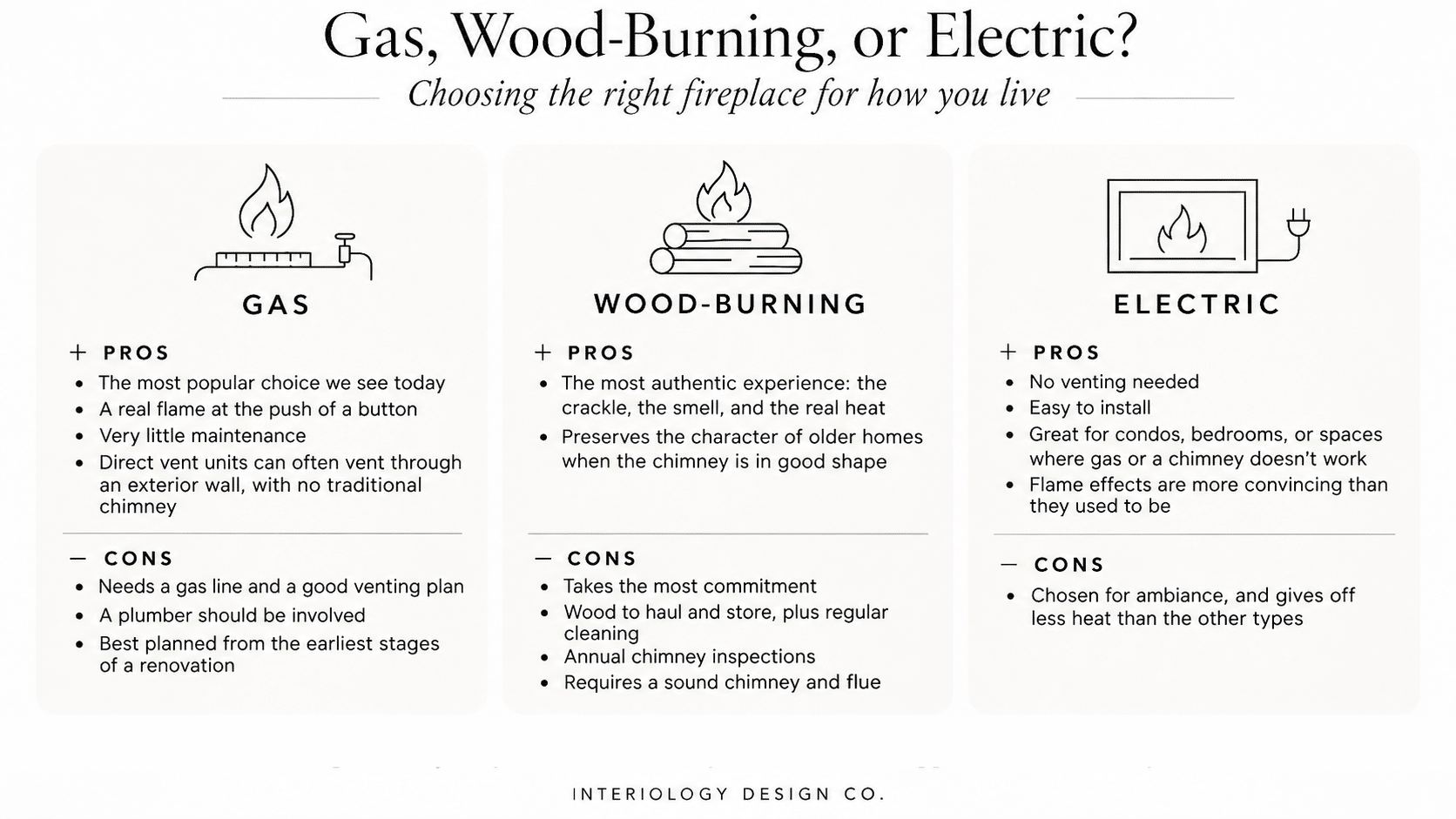
The first decision in luxury fireplace design is the fuel, and it comes down to how you want to live with the fireplace.
Wood burning is the most authentic experience: the crackle, the smell, and the real heat. It also takes the most commitment. You have to haul and store the wood, keep the fireplace clean, schedule annual chimney inspections, and have a sound chimney and flue. Many older homes in our area already have one, and when the chimney is in good shape, we try to preserve that character.
Gas is the most popular choice we see today, whether it’s natural gas or propane. You get a real flame at the push of a button with very little maintenance. Direct vent units can often vent through an exterior wall, so you don’t need a traditional chimney. You do need a gas line and a good venting plan, which means a plumber should be involved. If you’re renovating, keep the fireplace in mind from the earliest planning phases.
Electric fireplaces have come a long way. They need no venting and they’re easy to install, which makes them a great option for condos, bedrooms, or any space where we can’t get gas to or a chimney doesn’t work. The flame effects are much more convincing than they used to be. An electric fireplace is chosen for ambiance and gives off less heat than the other types, so keep that in mind.
Whichever you lean toward, we talk through how often you’ll use the fireplace, what the house can support, and the overall look before recommending one over another.
Getting the Scale and Proportion Right
Proportion is where a fireplace succeeds or fails. We look at the height of the ceiling, the width of the wall, and where people will sit. A fireplace on a long wall needs enough presence to anchor it, and in a smaller room, an oversized mantel will overwhelm everything around it.
Mantel height and depth relate to the firebox and the room, and to safety. There are required clearances between the firebox opening and anything combustible, including the mantel itself. A non-combustible hearth extension in front is typically 16 to 20 inches from the front of the firebox, depending on the size of the opening.
The television is the question we get asked the most. Mounting it above the mantel is common, but it often ends up too high to watch comfortably, and heat can be a concern. When it has to go there, we look at recessing it, using a mount that pulls down, or lowering the mantel. Sometimes the better answer is an adjacent wall or the cabinetry beside the fireplace, so the fireplace can be the focal point it’s meant to be.

Luxury Fireplace Design Mistakes to Avoid
The most common mistake we see is scale. A surround or mantel that’s too small looks lost on the wall, and one that’s too heavy dominates the room. The second is the television: mounting it too high above a working fireplace with no thought for the viewing angle or the heat. The third is treating the fireplace in isolation. It needs to relate to the room’s architecture, including the trim, the built-ins, and the ceiling.
The fourth is furniture arrangement. If the seating doesn’t face the fireplace or you can’t comfortably gather around it, you lose its whole purpose. The last is ignoring the practical side: clearances, venting, and materials that can handle the heat.
Planning a Fireplace Renovation
A fireplace renovation is more than a new surround. We start by understanding what’s behind the wall. For a wood-burning fireplace, that means a chimney inspection, because the flue and liner have to be sound before we design anything on the face. For gas, it means planning the gas line and the vent route. Converting wood to gas or adding a new fireplace can involve framing, venting through an exterior wall, permits, and inspections.
The timeline depends on the scope. A cosmetic refresh, such as a new surround and mantel, can take a matter of weeks once the materials arrive, and lead times on custom stone or millwork usually drive the schedule. A full conversion or new installation takes longer because of the trades and inspections involved.
What surprises homeowners most is what we find once we open things up: an old chimney that needs a new liner, framing that has to be adjusted, or clearances that don’t meet today’s codes. That is common in older New England homes, which is why we plan carefully up front and coordinate the trades so those surprises are anticipated.
Planning luxury fireplace design for your home
The decisions above work together, and most homes need all of them answered before the design begins. Figuring out the right answers starts with how the room is built and how your household uses it, which is the same process behind every living room we design.
Visit the Studio
The Experience Studio at Interiology Design Co. at 430 Main Street in Watertown is open Tuesday through Friday, 10am to 5pm, and by appointment. It’s where stone, tile, and millwork get evaluated in person before anything becomes permanent. Interiology Design Co. Projects are not limited to Massachusetts. Give us a call to plan the fireplace for your home.The next step
If you’re weighing a fireplace as part of a larger renovation, What Makes a Full Service Interior Design Firm covers how design, sourcing, and construction come together under one roof.

If you’re planning a renovation and want to talk through luxury fireplace design for your space, we’d welcome the conversation. Tell us about the project. We’ll tell you what’s possible.

Begin The Conversation
The right fit starts
with a single meeting.
Tell us about the project. We'll tell you what's possible and whether we're the right team to get you there.
Schedule A Consultation