

Holiday and Christmas Decorating from a Master Designer
Holiday and Christmas decorating works best when it starts with the house you already have. These tips cover the choices that shape a well-designed holiday home: the color palette, the tree and wreaths, the mantel, the staircase, the entryway, the dining table, and the lighting. A beautiful room can look even better in December, and the way to get there is to edit, scale things to the space, and keep the glow warm.
About the Expert

Start with the Design Already in Your Home
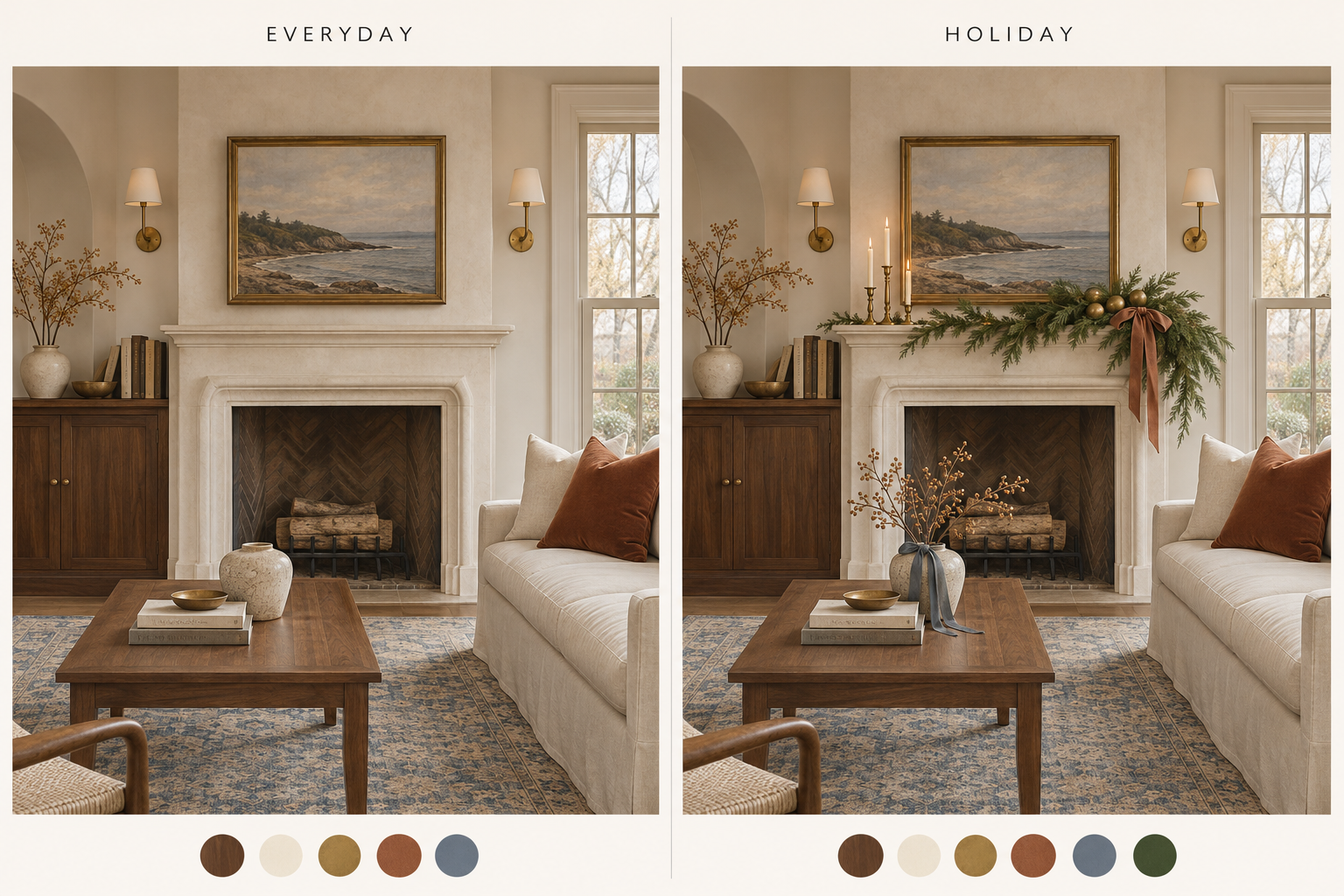
When it comes to Holiday and Christmas decorating, the first step is to look at what the room already gives you.
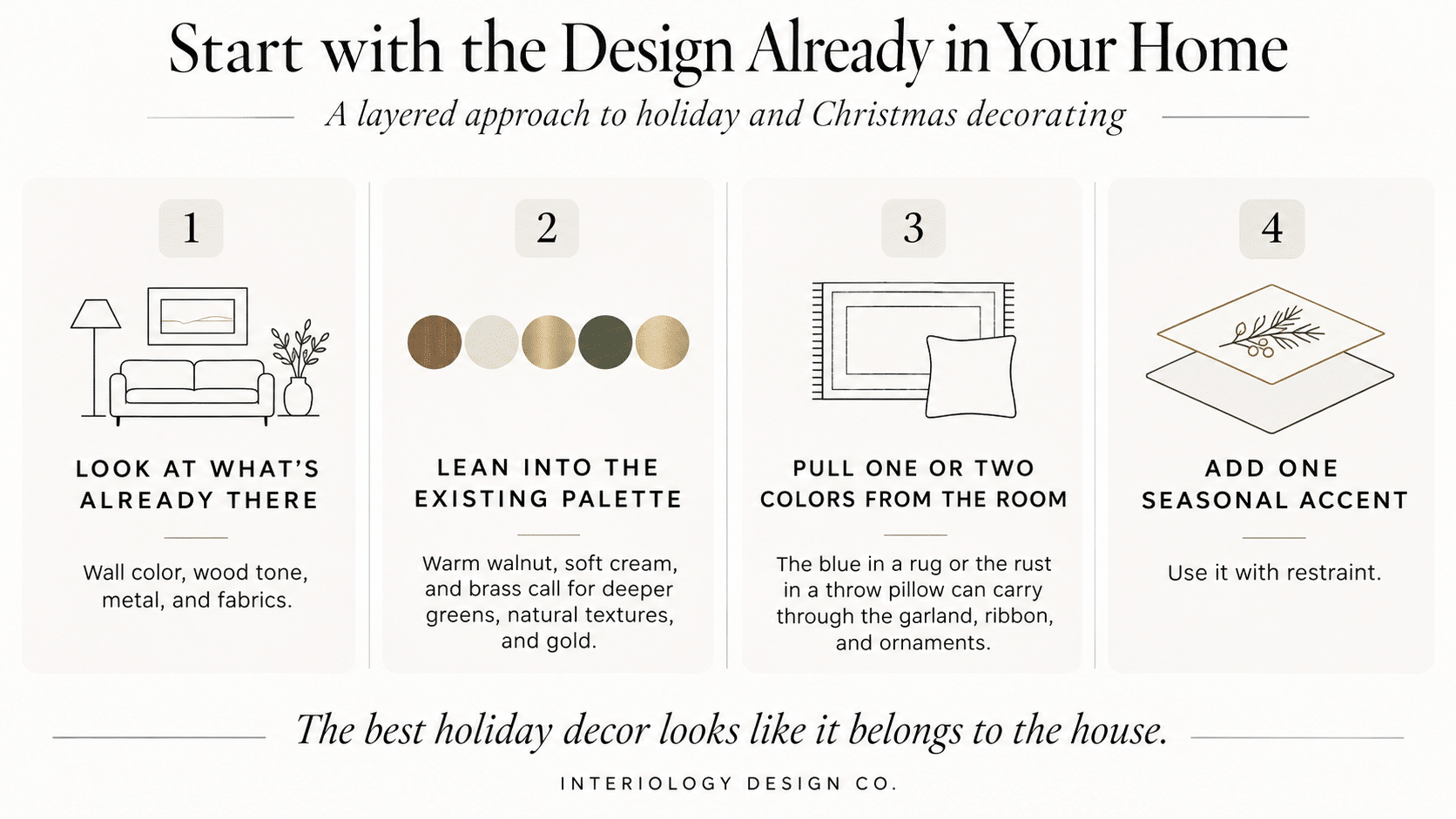
The best holiday decor looks like it belongs to the house, so we always start with what’s already there: the wall color, the wood tone, the metal, and the fabrics. If a living room is built around warm walnut, soft cream, and brass, we lean into that with deeper greens, natural textures, and gold. A bright red and green palette would fight a room like that.
We think of the holiday palette as a layer on top of the design. Pull one or two colors that already appear in the room, such as the blue in a rug or the rust in a throw pillow, and let those carry through the garland, the ribbon, and the ornaments. Then add one seasonal accent color, used with restraint. When the holiday colors relate to the permanent ones, the whole house feels intentional, and it feels like home.
Where the Christmas Tree and Wreaths Go
Placement starts with how the room is used. A Christmas tree wants to be the focal point without blocking traffic, a view, or a conversation. That is often a corner near a window, or a spot flanking the fireplace, where the tree can be seen from the entry and from the main seating.
For sizing, we measure the ceiling first. We like to leave at least 6 to 12 inches above the tree for the topper, and we pay as much attention to width as to height. A tree that’s too full can swallow a room, and in a home with 9 or 10 foot ceilings, a slimmer tree often looks more elegant than a wide one.
Wreaths should be in proportion to whatever they hang on. On a front door, roughly half to two thirds of the door’s width usually feels right. Over a mantel, the wreath should relate to the mirror or art behind it. Then we style everything to the house. A shingle-style home might want loose, natural greenery, while a formal Georgian can carry something more tailored and symmetrical.
How to Decorate a Mantel
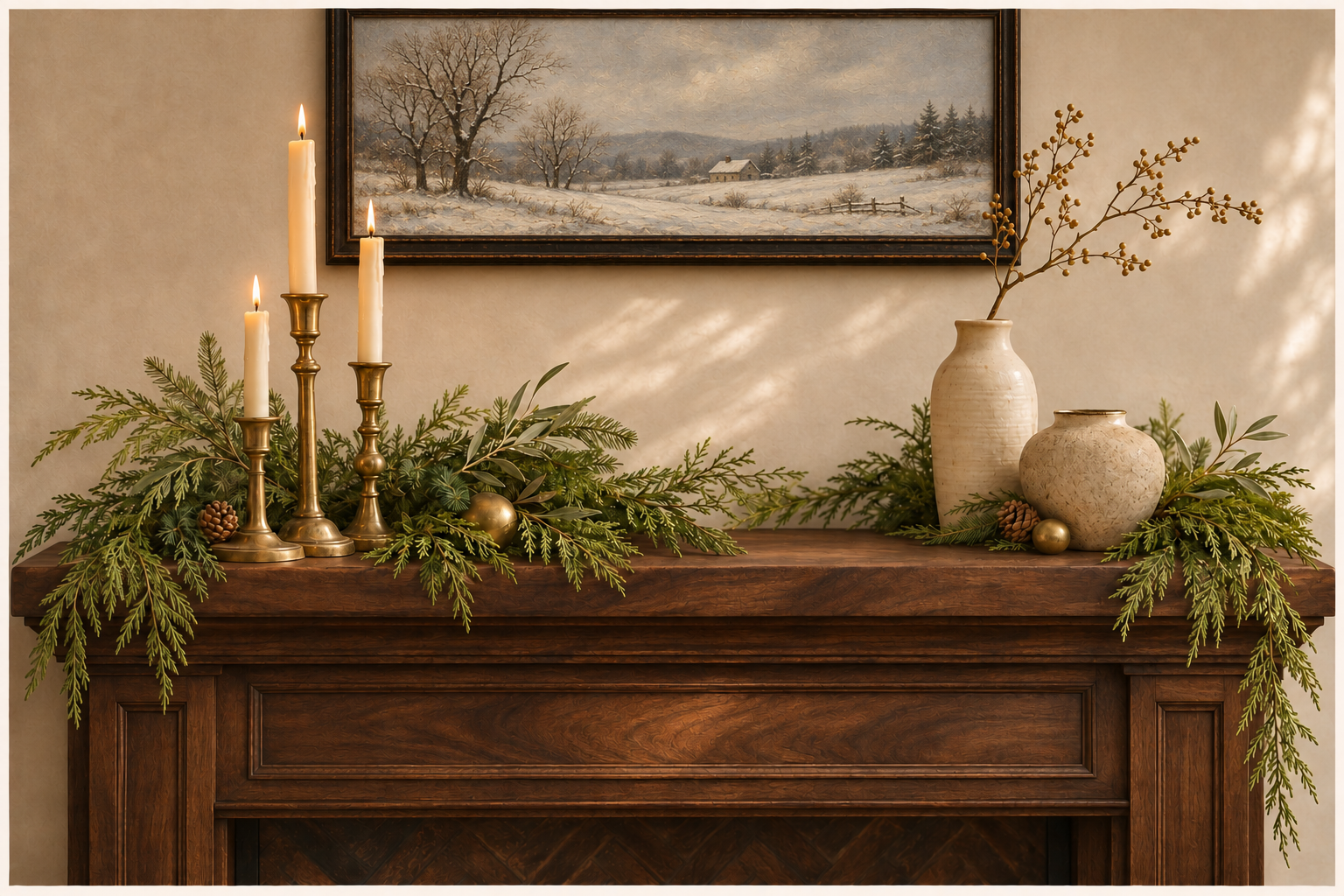
For Christmas decorating, the mantel is one of the first places guests look, so it gets a lot of thought. We build it in layers. A garland forms the base, then candlesticks and vessels in varying heights go on top, with some greenery draping past the edges. The mantel should feel abundant without looking cluttered, and we like to leave a little negative space so the eye has somewhere to rest.
How to Decorate a Staircase
On a staircase, the garland should follow the line of the railing in gentle swags, secured discreetly so it doesn’t harm the finish. Zip ties work well, and a few ribbons or clusters at the newel post go a long way toward holding everything in place.
How to Decorate an Entryway
The entry sets the tone for the whole house. A wreath, a pair of planters or lanterns at the door, and one meaningful moment inside, such as a console with greenery and candles, is often all you need.
Favorite Holiday Materials
Across all three spaces, we return to the same materials: fresh cedar, magnolia, and eucalyptus, velvet and linen ribbons, brass, aged bronze, and mercury glass. They bring texture and a quiet richness, and they pair well with the finishes already in most homes.

Setting the Holiday Dining Table
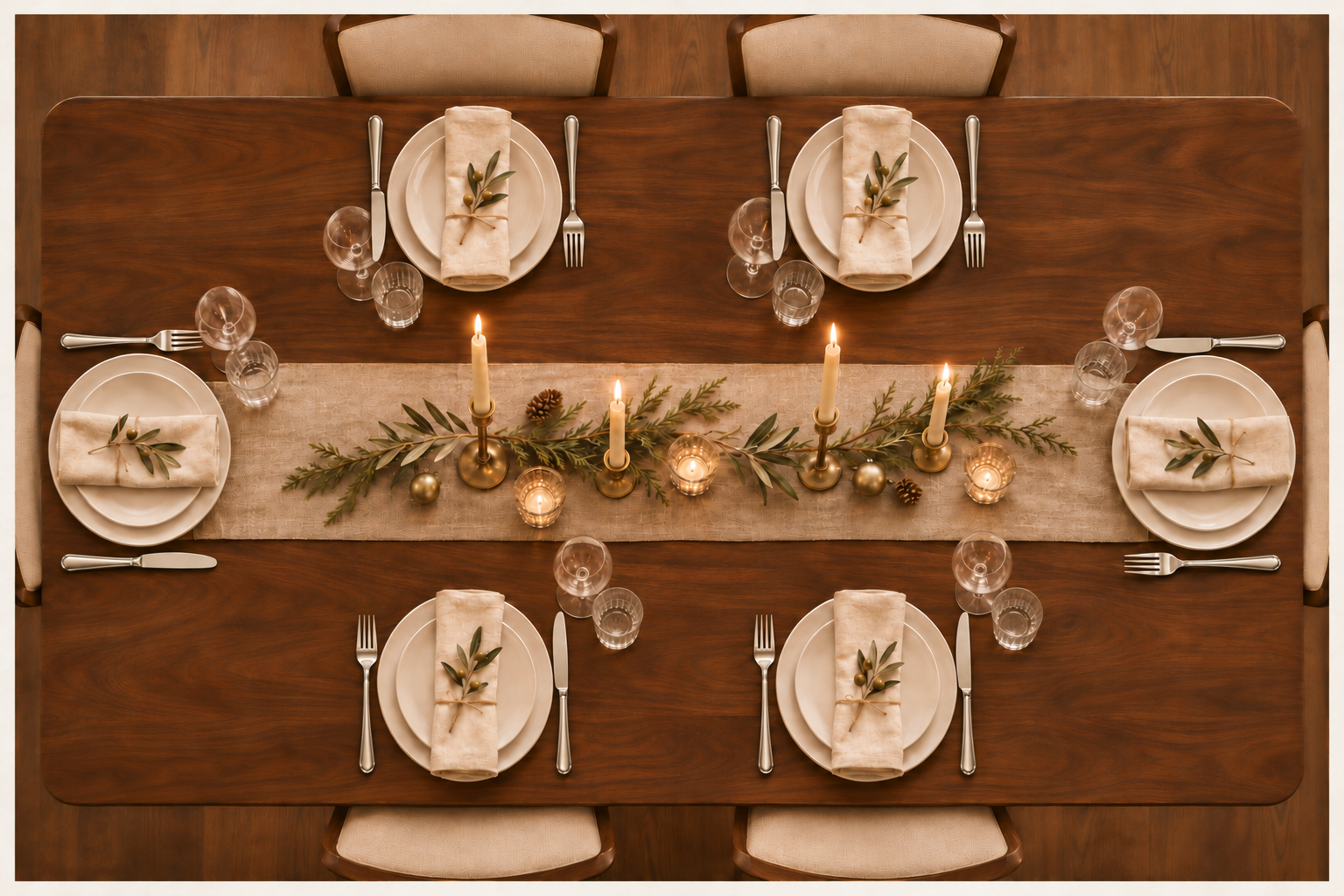
A holiday table should invite conversation, so the first rule is to keep the centerpiece low. If guests can’t see each other across the table, it’s too tall. Low greenery, candles in varying heights, and a few seasonal touches running down the center always work beautifully.
A low centerpiece keeps the sightlines open, and no one shows the value of a clear view across the table better than the dinner scene in Wham!’s Last Christmas music video. In the video, George Michael watches his former love across the table as she sits with a new man, his bandmate Andrew Ridgeley, and nothing in the arrangement blocks his view. It makes for good drama on screen, and it’s the line of sight every guest at your table deserves, though we hope the conversation at yours is a happier one.
Then think about the room as a whole. Leave comfortable clearance behind the chairs so people can get in and out and whoever is serving can move freely. If you’re doing a buffet, set it up away from the table so there’s a natural flow and no bottleneck. Lighting matters as much as the place settings, so dim the chandelier to a soft glow and let the candlelight do the rest. Overhead light at full brightness makes even a beautiful table feel flat.
Lighting the Holidays
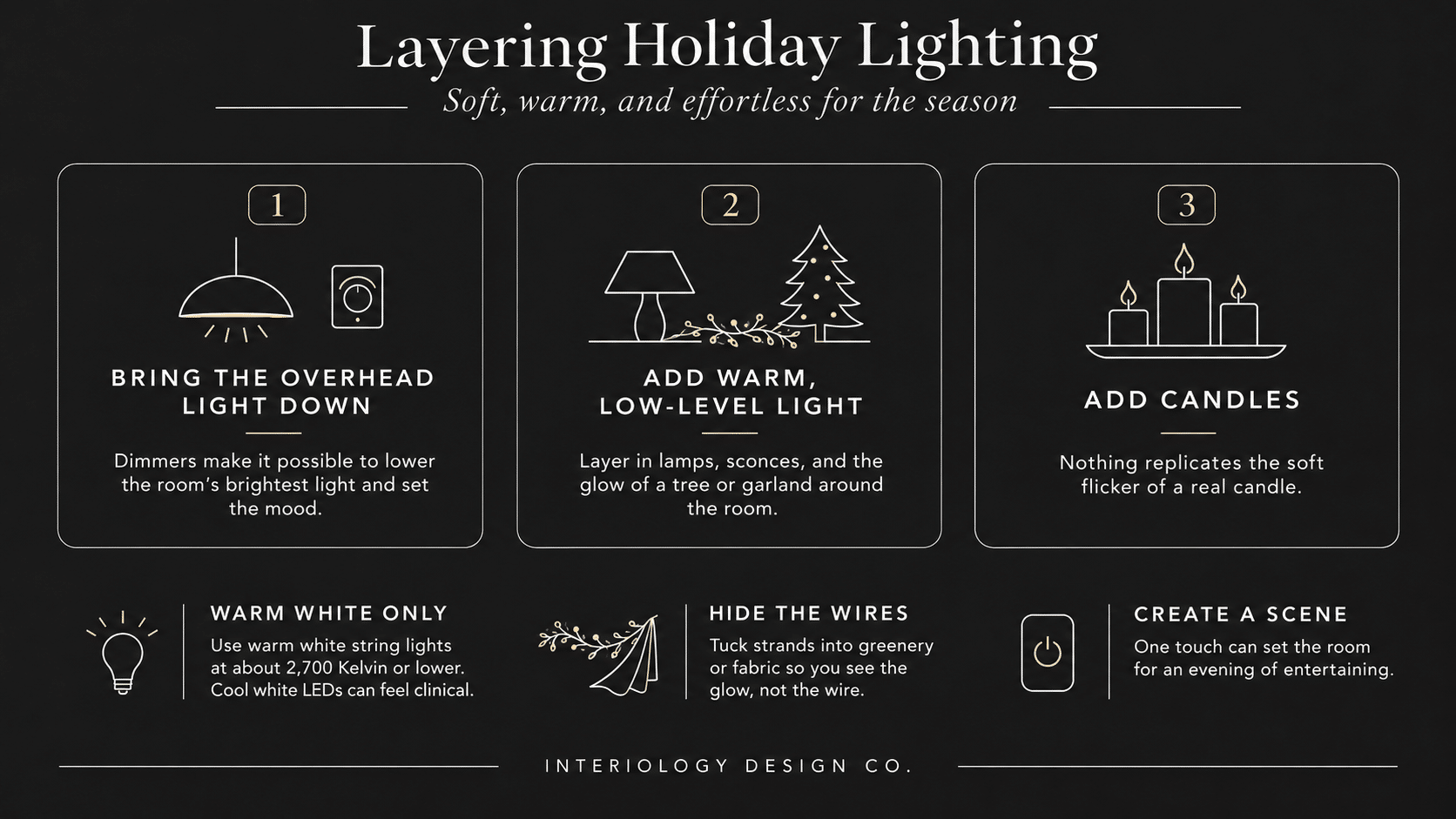
Lighting is the most powerful tool for a holiday atmosphere, and it’s the one people overlook most. We think in layers. First, bring the overhead light down, which is where dimmers become essential. Then add warm, low-level light around the room from lamps, sconces, and the glow of a tree or garland. Finally, add candles, because nothing replicates the flicker of a real one.
With string lights, color temperature is everything. We recommend warm white at around 2,700 Kelvin or lower, since cool white LEDs can make a room feel clinical. Hide the wires by tucking them into greenery or fabric so you see the glow and never the strand. For clients who want the season to feel effortless, we design lighting systems with scenes, so one touch sets the room for an evening of entertaining. However you get there, the goal is the same: soft, warm, and layered. To see how ambient, task, accent, and decorative layers work together all year, read our guide to the types of lighting in interior design. For more on designing the rooms where you gather, see our guide to living room interior design.
Christmas Decorating Mistakes to Avoid
The biggest mistake we see is covering up the design instead of complementing it. You’ve invested in a beautiful room, so don’t bury it under every decoration you own. Edit, pick a few moments, and do them well.
The second is scale. A tree that’s too big for the room or a wreath that’s too small for the door throws the whole space off. The third is lighting: cool white LEDs, too many competing light sources, or overhead lights at full blast. The fourth is forgetting function. Decorations that block walkways, crowd seating, or sit too close to a fireplace make a room harder to live in and entertain in.
Christmas decorating with a designer’s eye
The tips above work together, and most homes need several of them at once. Where the tree goes depends on the room, how the mantel is styled depends on the architecture, and the lighting ties it all together. A home that was designed well to begin with makes all of it easier, which is the idea behind every living space we design.
Visit the Studio
The Experience Studio at Interiology Design Co. at 430 Main Street in Watertown is open Tuesday through Friday, 10am to 5pm, and by appointment. It’s where lighting, finishes, and materials get evaluated in person before anything becomes permanent. Interiology Design Co. projects are not limited to Massachusetts. Give us a call to plan a home that’s ready for every season.The next step
If you’re thinking about the design of your home beyond the holidays, What Makes a Full Service Interior Design Firm covers how design, sourcing, and construction come together under one roof.

If you’re planning a renovation and want your home to feel ready for every season, including the holidays, we’d welcome the conversation. Tell us about the project. We’ll tell you what’s possible.

Begin The Conversation
The right fit starts
with a single meeting.
Tell us about the project. We'll tell you what's possible and whether we're the right team to get you there.
Schedule A Consultation